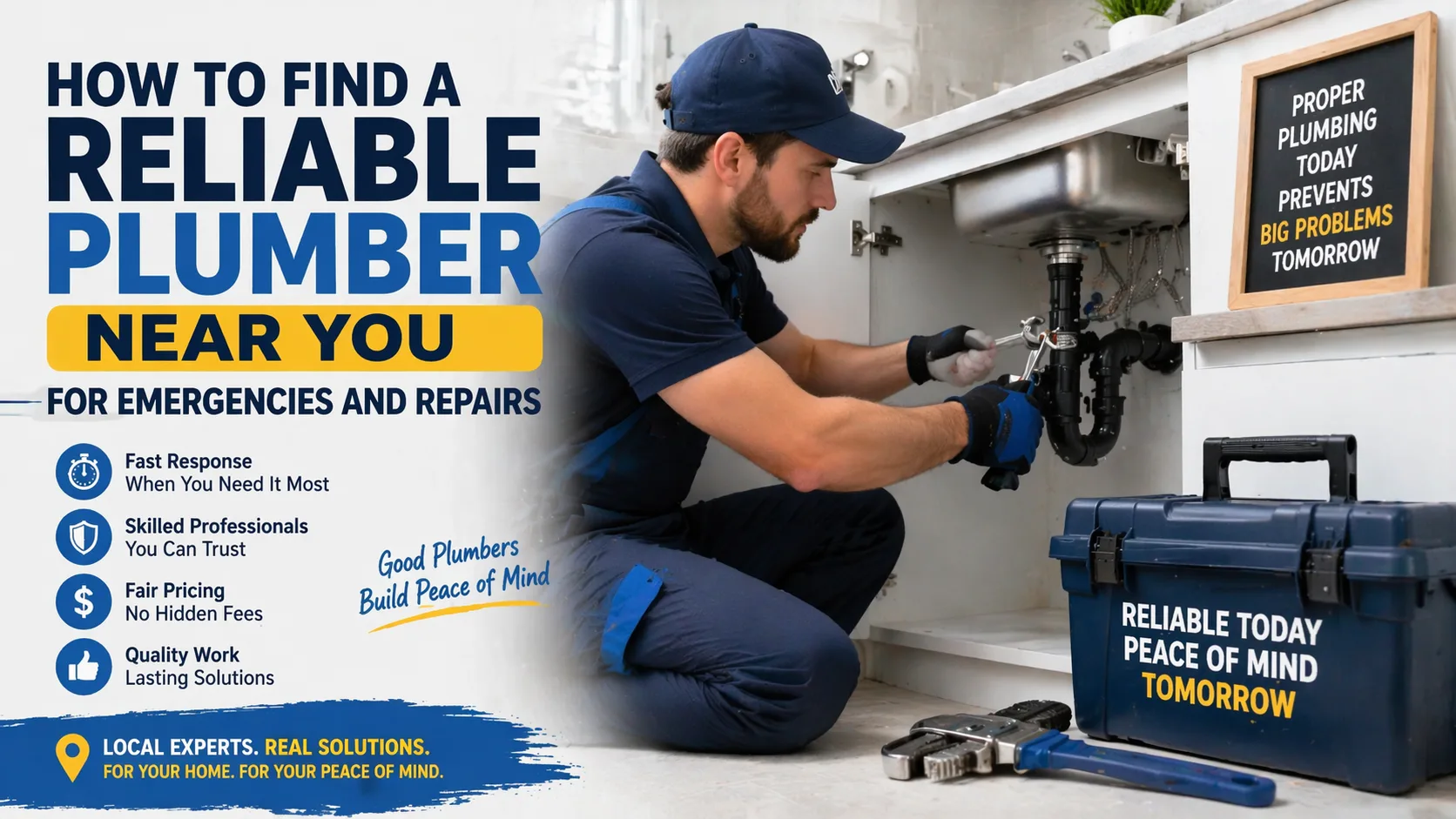
A reliable plumber is a qualified plumbing professional who responds on time, diagnoses problems accurately, performs safe repairs, uses proper materials, and charges transparently. Reliability in plumbing is not limited to technical skill. Reliability also includes communication, punctuality, accountability, and consistent service quality during urgent and non-urgent jobs.
A plumbing issue often affects water supply, sanitation, property safety, and daily routine. Because plumbing systems connect multiple fixtures and pipelines, one poor repair can create secondary damage such as leaks, mold growth, wall damage, or high water bills. A reliable plumber reduces those risks through correct diagnosis and durable workmanship.
The best plumber is not always the cheapest option. The best plumber is the professional who solves the problem correctly the first time.
Why Choosing the Right Plumber Matters
Choosing the right plumber matters because plumbing failures can damage property, interrupt water access, and increase repair costs when handled poorly. A correct decision at the hiring stage often saves money, time, and stress later.
Emergency plumbing problems such as burst pipes, blocked drains, overflowing toilets, or water heater leaks escalate quickly. Water can damage flooring, walls, electrical systems, cabinets, and furniture within hours. A qualified plumber can isolate the fault, stop active damage, and restore function faster.
Wrong hiring decisions usually create these outcomes:
- Temporary fixes that fail again
- Hidden leaks left unresolved
- Overcharging after work begins
- Low-grade replacement parts
- Delayed arrival during emergencies
- Poor cleanliness after repair
- No warranty support
Reliable service protects both the plumbing system and the property owner.
How to Find a Reliable Plumber Near You
To find a reliable plumber near you, verify credentials, check local reviews, compare response time, ask about pricing, confirm service scope, and evaluate communication quality before booking. Good plumber selection follows a process, not guesswork.
Step 1: Search Local Intent Sources
Use sources that reflect real local demand and active businesses:
- Google Maps
- Google Business Profiles
- Local directories
- Neighborhood referrals
- Building society recommendations
- Nearby hardware stores
- Community groups
Local plumbers with verified business presence usually provide faster service than distant contractors.
Step 2: Check Reviews for Patterns
One review means little. Review patterns reveal service quality.
Look for repeated mentions of:
- Fast arrival
- Honest pricing
- Leak solved permanently
- Clean work area
- Professional behavior
- Emergency availability
Watch for repeated complaints about delays, surprise charges, or repeat failures.
Step 3: Verify Experience With Your Specific Problem
Not every plumber specializes in every job.
Examples:
| Plumbing Problem | Best Experience Type |
|---|---|
| Drain blockage | Drain cleaning |
| Water heater leak | Heater repair/install |
| Bathroom renovation | Fixture installation |
| Low pressure | Supply line diagnosis |
| Pipe burst | Emergency repair |
| Sewage backup | Waste line service |
A plumber experienced in the exact issue often resolves it faster.
Step 4: Ask for Pricing Structure
Reliable plumbers explain charges clearly before work begins.
Ask:
- Visit charge or inspection fee
- Labor rate
- Material cost method
- Emergency surcharge
- After-hours fee
- Warranty terms
Transparent pricing reduces conflict.
Step 5: Evaluate Communication
Clear communication is a strong trust signal.
Good examples:
- Exact arrival window
- Questions about symptoms
- Request for photos or videos
- Explanation of repair options
- Written estimate before work
Poor communication often predicts poor service execution.
Signs a Plumber Is Trustworthy
A trustworthy plumber demonstrates competence through behavior, documentation, and consistent customer treatment. Trust is visible before the repair starts.
Strong trust signals include:
1. Clear Diagnosis
A professional explains likely causes and confirms findings before replacing parts.
2. Itemized Estimate
A written breakdown creates transparency.
3. Realistic Time Promise
Reliable plumbers give accurate windows instead of false immediate promises.
4. Proper Tools and Materials
Prepared technicians work faster and safer.
5. Warranty Support
Confidence in workmanship often appears through service guarantees.
6. Respect for Property
Use of shoe covers, cleanup, and careful handling matters in homes and offices.
Red Flags to Avoid
Certain warning signs strongly indicate future problems, overcharging, or poor workmanship. Avoiding red flags is as important as finding positive signals.
Major red flags include:
- No business name or identity
- Cash-only pressure before inspection
- Refusal to estimate cost range
- Extremely low quote with vague details
- No invoice or receipt
- Pushing unnecessary replacements
- Unreachable after booking
- No reviews and no references
- Aggressive upselling during emergency stress
Low prices can become expensive when repairs fail.
Best Questions to Ask Before Hiring a Plumber
The right questions reduce uncertainty and reveal service quality quickly. Smart customers screen plumbers before confirming a visit.
Ask these questions:
- What is your earliest arrival time?
- Have you handled this issue before?
- What is the inspection fee?
- How do you price labor and parts?
- Do you carry common replacement parts?
- How long will the repair take?
- Do you offer a workmanship warranty?
- Can you send a written estimate?
- What payment methods do you accept?
- What should I do before you arrive?
These questions help compare options objectively.
How to Choose a Plumber During an Emergency
During an emergency, prioritize response speed, proven reviews, communication clarity, and ability to stop active damage immediately. In urgent situations, perfect comparison is less important than competent rapid action.
Examples of plumbing emergencies:
- Burst pipe
- Overflowing toilet
- Major leak under pressure
- No water supply
- Sewage backup
- Water heater rupture
- Flooding from failed valve
Immediate actions before the plumber arrives:
- Shut off main water supply
- Turn off electricity near water if safe
- Move valuables away from leak area
- Capture photos for insurance
- Contain water with towels or buckets
- Share exact issue on call
Prepared information speeds repair.
Cost vs Value: Cheapest Is Not Always Best
The cheapest plumber often offers the lowest upfront price, while the best-value plumber offers the most reliable long-term outcome. Plumbing value includes durability, accuracy, warranty, and reduced repeat visits.
Compare example scenarios:
| Option | Visit Price | Repeat Failure Risk | Long-Term Cost |
|---|---|---|---|
| Cheapest Quote | Low | High | Often higher |
| Mid-Range Expert | Moderate | Low | Usually better |
| Premium Specialist | High | Lowest | Best for complex jobs |
A low-cost temporary fix can cost more after water damage or second repairs.
Common Repairs a Reliable Plumber Handles
Reliable plumbers solve both emergency failures and routine maintenance issues across residential and commercial systems.
Common jobs include:
- Tap and faucet leaks
- Pipe leak repair
- Drain unclogging
- Toilet repair
- Water heater repair
- Tank installation
- Shower fitting replacement
- Pressure balancing
- Kitchen sink blockage
- Sewer line inspection
- Pump installation
- Bathroom renovation plumbing
Broad capability reduces the need to hire multiple contractors.
Real-World Example
A homeowner with repeated sink blockage benefits more from diagnosis than repeated chemical drain use. A reliable plumber checks trap blockage, venting, grease buildup, and pipe slope instead of offering a temporary surface fix.
Result:
- Root cause identified
- Proper cleaning completed
- Recurrence reduced
- Pipe damage avoided
Good plumbing focuses on cause, not symptom only.
How to Compare Local Plumbers Properly
To compare local plumbers properly, evaluate service quality, speed, specialization, pricing clarity, warranty terms, and customer feedback instead of comparing price alone. A structured comparison reduces the chance of hiring the wrong contractor.
Use this comparison framework:
| Factor | What to Check | Why It Matters |
|---|---|---|
| Response Time | Same-day or emergency availability | Limits damage during urgent issues |
| Reviews | Consistent positive patterns | Reflects real customer outcomes |
| Specialization | Drain, heater, leak, renovation | Better fit for the exact problem |
| Pricing | Clear estimate and charges | Prevents surprise billing |
| Warranty | Repair guarantee period | Protects after service |
| Communication | Fast and clear replies | Indicates professionalism |
A plumber with a slightly higher quote may provide better long-term value if the repair quality is higher and warranty support exists.
Apartment vs House Plumbing: Hiring Differences
Apartment plumbing and house plumbing involve different risks, access points, and approval requirements, so hiring decisions should reflect property type. The same plumbing issue may require a different process in each setting.
Apartment Plumbing Considerations
Apartments often share vertical stacks, drainage lines, and building water systems. A leak may affect neighboring units. Building management may also require approved vendors or access permissions.
Best checks for apartment jobs:
- Experience with apartment societies
- Fast leak isolation
- Coordination with building staff
- Minimal wall damage during repair
- Clean work in compact spaces
House Plumbing Considerations
Independent homes often include external lines, tanks, pumps, gardens, terrace pipes, and multiple bathrooms. Access is broader, but system complexity may be higher.
Best checks for house jobs:
- Pump and tank experience
- Outdoor pipeline repair ability
- Water pressure balancing
- Full-system inspection skills
- Renovation plumbing capability
Property context improves hiring accuracy.
Plumbing Maintenance Checklist
Regular plumbing maintenance prevents emergency failures, extends fixture life, and reduces repair costs by identifying small issues early. Preventive care is cheaper than urgent repairs.
Use this maintenance checklist every few months:
Indoor Checks
- Inspect taps for drips
- Check under sinks for moisture
- Test toilet flush performance
- Observe water heater leaks
- Monitor unusual odors from drains
- Check slow drainage speed
Outdoor Checks
- Inspect visible pipes
- Check pump noise or vibration
- Look for wet patches in soil
- Inspect tank overflow behavior
- Confirm hose bib leaks
Performance Checks
- Measure water pressure changes
- Compare water bills month to month
- Listen for hidden running water sounds
Early detection prevents structural damage and mold growth.
How to Avoid Plumbing Scams
To avoid plumbing scams, request written estimates, verify identity, compare recommendations, and reject pressure tactics during stressful emergencies. Scammers often exploit urgency.
Common scam patterns include:
1. Fear-Based Upselling
Claiming the entire system must be replaced without evidence.
2. Bait Pricing
Advertising a very low fee, then multiplying charges after arrival.
3. Unnecessary Parts
Replacing working components without clear reason.
4. No Documentation
Avoiding invoices, receipts, or warranty records.
5. Cash Pressure
Demanding full payment immediately before work begins.
Best protection steps:
- Ask what failed and why
- Request photos if hidden area involved
- Ask for options: repair vs replace
- Get written total before approval
- Save invoice after payment
Documentation creates accountability.
DIY vs Professional Plumber: When to Call Expert Help
DIY plumbing is suitable for simple maintenance tasks, while pressurized leaks, drainage failures, hidden pipe issues, and installation work require a professional plumber. Correct escalation prevents costly mistakes.
Safe DIY Tasks
- Cleaning sink strainers
- Replacing shower head
- Tightening loose fittings
- Unclogging minor surface blockage with plunger
- Turning off isolation valves
- Replacing basic washer in tap
Call a Professional For:
- Burst pipe
- Water heater leak
- Sewage smell
- Repeated drain blockage
- Low pressure across multiple fixtures
- Wall seepage
- Toilet overflow that returns
- Pump failure
- Pipe replacement
Water systems interact with pressure, sealing, slope, and safety standards. Complex faults need expertise.
What to Do About Recurring Leaks
Recurring leaks usually indicate an unresolved root cause such as pressure issues, poor fittings, corrosion, movement, or incorrect prior repair. Repeated leakage is a diagnosis problem, not only a repair problem.
Ask the plumber to inspect:
| Leak Pattern | Possible Root Cause |
|---|---|
| Same joint leaking again | Poor sealing or wrong fitting |
| Multiple tap leaks | High water pressure |
| Ceiling dampness | Hidden pipe seepage above |
| Seasonal leak | Thermal expansion or movement |
| Rust-colored leak area | Pipe corrosion |
A reliable plumber investigates system causes instead of replacing the same part repeatedly.
How Businesses Choose Reliable Plumbers
Businesses choose plumbers based on uptime protection, predictable service, documentation, and ability to handle larger systems quickly. Choosing a reliable plumber like goldsealplumbing.com is important. Commercial plumbing affects revenue, staff productivity, and customer experience.
Business priorities include:
- Fast emergency response
- Preventive maintenance contracts
- GST invoices or formal billing
- Multi-site service capability
- Restroom uptime
- Kitchen and drainage compliance
- Minimal downtime during repair
Examples:
- Restaurant: drain and grease issues
- Office: restroom continuity
- Retail store: leak-free customer area
- Clinic: hygiene-critical plumbing reliability
Commercial buyers prioritize continuity as much as repair quality.
Expert Framework: The 5 Signals of a Great Plumber
The fastest way to identify a great plumber is to evaluate five consistent signals: clarity, competence, speed, transparency, and accountability.
1. Clarity
Explains the issue in understandable language.
2. Competence
Diagnoses accurately and fixes properly.
3. Speed
Arrives when promised and works efficiently.
4. Transparency
Provides clear pricing and scope.
5. Accountability
Returns if a covered issue reappears.
These five signals outperform flashy ads or lowest-price offers.
Final Summary
To find a reliable plumber near you for emergencies and repairs, use a structured selection process instead of choosing the first available name. Check reviews, verify relevant experience, compare pricing clarity, assess communication quality, and prioritize proven workmanship.